


Spiritual Self-Care Guide: Strengthening Mind, Body, and Soul Through Faith
"Spiritual self-care" is one of those phrases that sounds beautiful but can feel vague in real life.
Like, what does it actually look like on a busy Tuesday when your calendar is packed, your phone will not stop buzzing, and your mind is already three steps ahead?
Here’s the simple truth. Spiritual self-care is the practice of staying connected to God (or your faith foundation) in a way that supports your whole life, not just your Sunday life. It is how you care for your inner world so your outer world doesn’t constantly control you.
Where stress, burnout, and comparison culture are basically everywhere, faith-based self-care is not “extra.” For many people, it is the difference between coping and thriving.
What spiritual self-care really means (and what it doesn’t)
Spiritual self-care is not about being perfect. It is not about forcing yourself into a rigid routine that makes you feel guilty when you miss a day. And it is definitely not about pretending you are fine when you are not.
Spiritual self-care is about creating space to be honest with God, to receive guidance, and to rebuild your strength from the inside out.
Think of it like this. If physical self-care helps you feel better in your body, spiritual self-care helps you feel steadier in your soul. It gives you a place to put your worries, process your emotions, and remember who you are when life gets loud.
To explore more about this essential aspect of life and its impact on our well-being, visit Life Above, a resource dedicated to promoting spiritual self-care and connection with one's faith.

The three-part approach: mind, body, and soul
A faith-centered self-care practice works best when it supports your whole self. Not just your prayer life, but your thoughts, habits, energy, and relationships too.
1) Strengthening your mind through faith
Your mind is often the first place spiritual exhaustion shows up. Racing thoughts, negative self-talk, fear of the future, and mental overload can quietly drain you. Faith-based mental care is about renewing what you dwell on.
Start with small, repeatable practices that bring your thoughts back to truth.
A few ideas that work well in everyday American life, whether you are commuting, parenting, or building a business:
Scripture or devotional “anchors”: pick one verse or short truth each week and return to it when anxiety spikes.
Prayer journaling: write the worry, then write the prayer. This simple shift helps you stop looping and start releasing.
Faith-based boundaries: limit what fuels comparison, like constant social scrolling, and replace it with something that restores you.
Also, give yourself permission to ask better questions in prayer. Not only “God, fix this,” but “God, what are You teaching me here?” and “What do I need to let go of?”
2) Caring for your body as a spiritual practice
In many faith traditions, the body is not an afterthought. It is part of stewardship. When you are chronically tired, dehydrated, or living on stress hormones, it becomes harder to hear God clearly and respond with patience.
Spiritual self-care can be as practical as taking a walk and praying while you move. Or choosing sleep because you know you show up with more grace when you are rested.
Try connecting everyday body habits to spiritual intention:
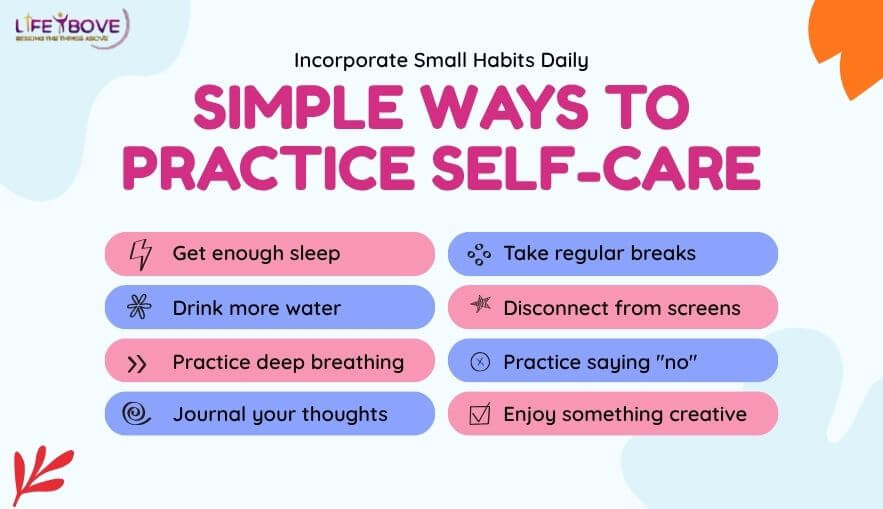
Drink water and treat it as a reset, not a chore.
Eat in a way that supports energy, not just convenience.
Move your body regularly, even if it is ten minutes.
Breathe slowly before hard conversations and invite God into the moment.
This is not about perfection or a “fitness glow-up.” It is about honoring what you’ve been given so you can live with strength and clarity.
3) Nourishing your soul with consistent connection
Soul care is where faith-based self-care becomes deeply personal. It is the part that helps you feel grounded, held, and guided.
The key word is consistent. Not long. Not complicated. Just consistent.
If you want a simple rhythm, try this:
Morning: one minute of surrender. “God, lead me today.”
Midday: a quick check-in. “What am I carrying that isn’t mine?”
Evening: reflection and gratitude. “Where did I see You today?”
You can also build soul care through worship music, time in nature, service, church community, or a small group that keeps you encouraged and accountable.
And yes, sometimes spiritual self-care is also allowing yourself to rest without guilt. Rest is not laziness. Rest can be obedience.
When spiritual self-care feels hard (and what to do)
There are seasons when prayer feels dry, faith feels quiet, and you feel like you are doing everything “right” but still feel heavy. That does not mean you are failing. It often means you are human.
In those moments, focus on what is sustainable:
Keep showing up in small ways.
Ask for support from trusted faith friends or leaders.
Get professional help when you need it, especially if anxiety or depression is persistent. Therapy and faith can work together beautifully.
Most importantly, do not confuse God’s silence with God’s absence. Some growth happens in the hidden places first.
Building a spiritual self-care routine you will actually keep
The best routine is the one you can maintain when life is busy. Start small, then build.
Here’s an easy structure that works for many people:
Pick a daily non-negotiable (5 minutes of prayer, a devotional, or a gratitude list).
Pick a weekly reset (church, extended quiet time, a long walk with worship).
Pick a monthly reflection (review what is working, what is draining you, and what God is calling you to change).
If you miss a day, don’t spiral. Just return. Spiritual self-care is not a streak. It is a relationship.
A gentle next step (from me to you)
If you’re ready to go deeper and build a life that feels aligned, peaceful, and purpose-driven, I invite you to connect with me, Marie Woods. I’ve devoted my work to empowering people to grow, strengthen their mindset, and step into the future God is calling them toward.
FAQs
What is spiritual self-care in a Christian context?
Spiritual self-care in a Christian context means caring for your inner life through prayer, Scripture, worship, and rest. It helps you stay rooted in God, manage stress, and live with purpose and peace.
How do I practice spiritual self-care when I’m busy?
Keep it simple and consistent. Try a short morning prayer, one verse on your phone, worship during errands, and a nightly gratitude check-in. Small daily habits create lasting spiritual strength.
Can spiritual self-care help with anxiety and burnout?
Yes. Faith-based practices like prayer, reflection, community support, and healthy boundaries can calm the nervous system and renew hope. If anxiety is intense, combine spiritual support with professional care.